
Resources
Blog
Insights on events, technology, and the future of gathering
Latest articles
Insights on events, technology, and the future of gathering
It’s no secret that event planning is often ranked as one of the most stressful careers globally. As an event planner, your to-do list is never-ending – from picking the perfect venue to keeping vendors in line and attendees happy, the pressure is real.
That’s where a trusty checklist comes to your rescue. A good checklist simplifies your planning process and brings a sense of calm to the storm. In the chaotic world of event planning, it’s going to be your secret weapon, transforming overwhelming tasks into manageable pieces and ensuring that no detail is overlooked.
We’re talking about a checklist that goes beyond the basics. A comprehensive guide that can be the difference between an event that’s just okay and one that’s spectacular, covering everything – setting your goals, sticking to your budget, choosing the right venue, and syncing perfectly with vendors.
Ready to become an event-planning superhero? Let’s dive into these steps and get you there!
Define the event goals and objectives
Every successful event starts with a clear understanding of its goals and objectives. Whether it’s for networking, fundraising, or celebration, defining the purpose and KPIs sets the foundation for all subsequent decisions.
Create a preliminary budget
A preliminary budget guides your choices in venue selection, vendor hiring, and other expenses, major or not.
Select an appropriate date and time
The right date and time are a must for maximum attendance. Consider holidays, industry events, and potential conflicts to ensure your target audience is available.
Research and select a venue
When selecting a venue, consider your event’s theme and audience size, as well as location accessibility, amenities, and ambiance.
Identify target audience and create invitation
Identify your audience and tailor your invitations to appeal to them. This step is key in ensuring your event resonates with the intended attendees.
Ensure accessibility (virtually/on-site)
Whether your event is virtual, on-site, or hybrid, accessibility is non-negotiable. Make sure to adhere to the accessibility guidelines and integrate tools that will ensure all attendees can participate fully.
Secure event permits and insurance
Securing the necessary permits and insurance protects your event from unforeseen liabilities and legal issues. Better safe than sorry!
Develop an event timeline and agenda
Developing a detailed timeline and agenda keeps your event organized and ensures that all activities run smoothly.
Select and book speakers or entertainers
Selecting and booking the right speakers or entertainers can significantly enhance the event experience.
Plan and organize event activities
Plan fun activities that align with your event’s objectives and keep attendees engaged and entertained.
Select and hire vendors
Carefully select and hire vendors that offer quality services and align with your event’s needs.
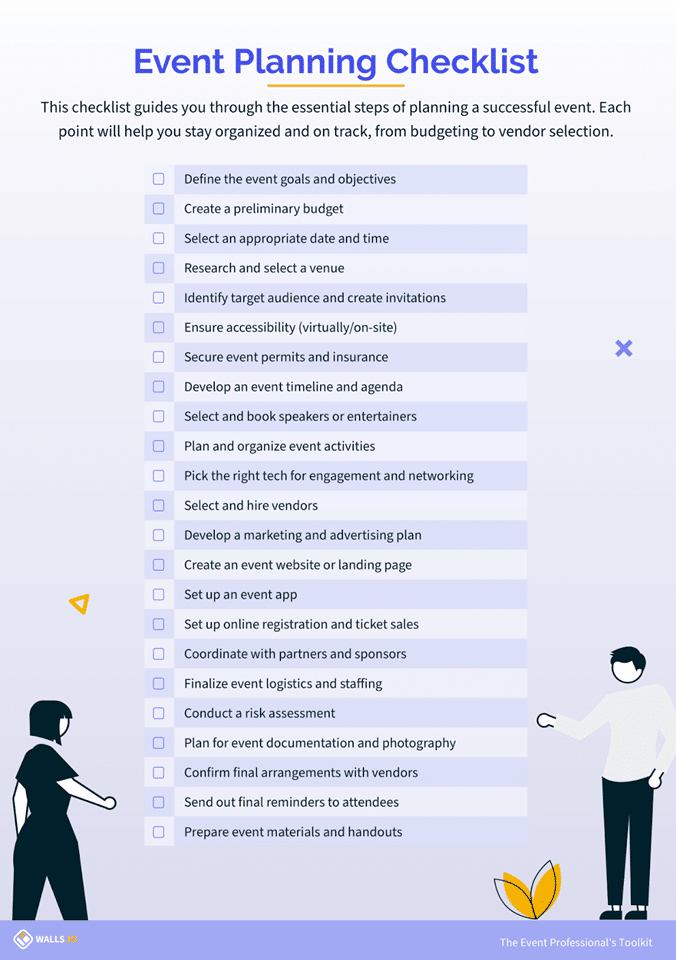
Download the full collection of event planning checklists from The Walls.io Event Professional’s Toolkit for free. Discover more event planning resources, including templates, guides, stats, and ideas to streamline your planning process and create an unforgettable event experience.
Develop a marketing and advertising plan
Develop a robust marketing plan to promote your event, including digital marketing, social media, and your partners’ communication channels.
Create an event website or landing page
Create an event website or landing page to provide attendees with all the necessary information and help you create excitement before the event.
Set up an event app
An event app not only elevates the attendee experience through interactive and personalized features but also opens new avenues for sponsorship and marketing, maximizing the impact and profitability of your events.
Set up online registration and ticket sales
Setting up online registration and ticket sales is essential for a smooth entry process and effective attendance tracking.
Coordinate with partners and sponsors
Coordinate with partners and sponsors to enhance the event’s offerings and reach a wider audience. Make sure you include them in your pre-event communications!
Finalize event logistics and staffing
Ensure all logistics are in place and staff are well-prepared to handle their roles efficiently.
Conduct a risk assessment
Conducting a risk assessment helps you identify potential crises during the event and develop an action plan for emergency situations.
Plan for event documentation and photography
Doing so before the event will ensure you capture the best moments for social proof, enhancing credibility and showcasing the event’s success to a wider audience.
Confirm final arrangements with vendors
Double-check arrangements with all vendors to ensure everything is set as planned.
Send out final reminders to attendees
Sending out final reminders helps boost attendance and keep the event top-of-mind.
Prepare event materials and handouts
Ensure all materials and handouts are prepared and ready for distribution.
A solid event checklist is set to simplify your event planning process and, thus, make your life easier. It’s a flexible tool that adapts to your event needs and evolves in accordance with them, ensuring every aspect of the event is executed flawlessly. A successful event resembles a masterful puzzle, where every piece fits perfectly; your checklist is its blueprint. Request a demo of Canapii today!